
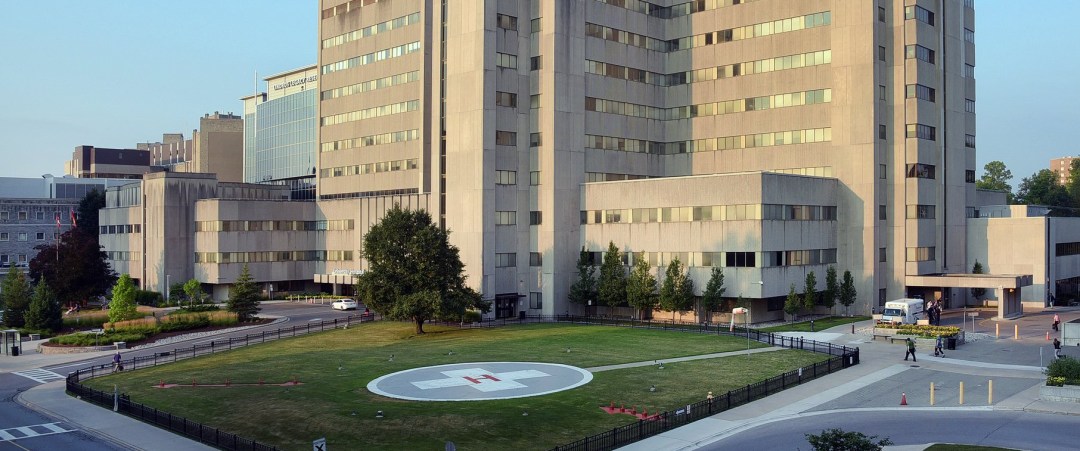
Welcome to the Internal Medicine Ultrasound (IMUS) rotation at University Hospital, where you will apply the practice of point-of-care ultrasound in the acute care of medical inpatients.
During the month, you will serve as the IMUS Resident for inpatient internal medicine services at University Hospital (Western University) in London, Ontario under the supervision of Dr. Jeffrey Yu, Dr. Michael Sattin, and other consultants in General Internal Medicine. You will have the opportunity to practice hands-on bedside scanning and integrate the results to help direct management for acutely ill medical inpatients. You will also be familiarized with the indications, contraindications, and growing applications of bedside ultrasound in internal medicine. Throughout this, you will develop POCUS competency by building a portfolio of ultrasound studies.
This rotation is available for Core Internal Medicine PGY 2-3 and Medicine Subspecialty PGY 4-6 learners. We are currently only accepting applicants from Canadian medical schools, but are open to discuss out-of-country elective rotators on a case-by-case basis.
Jump to section
Training Objectives
Medical Expert
- To demonstrate execution of focus in cardiac, pleural, lung, and procedural ultrasound studies.
- To become familiar with limited abdominal, renal, MSK, and lower limb DVT ultrasound studies.
- To clinically integrate ultrasound findings into patient care plans.
Communicator
- To proficiently complete and use Qpath software to report findings of point of care ultrasound studies to the most responsible physician and/or his/her team.
- To demonstrate appropriate communication with rotation supervisor related to urgent vs. non-urgent ultrasound overreading.
- To present interesting case(s) or ultrasound-related content (articles, podcasts, etc.) at a group presentation or for a web based learning module.
- To receive feedback related to ultrasound image generation and adjust technique or approach accordingly.
Collaborator
- To use appropriate escalation and/or consultation in setting of complex or indeterminate point of care ultrasound study.
- To work effectively with internal medicine team members.
Manager
- To demonstrate effective time management and efficiency in generating images.
- To demonstrate effective use of archiving software (Qpath) to manage and organize ultrasound studies as part of ultrasound portfolio.
- To demonstrate effective and ethical use of healthcare resources.
Health Advocate
- To understand and appreciate the ALARA (As Low As Reasonably Achievable) principle and how it relates to ultrasound.
- To understand the possible risks of radiation based imaging and advise, where possible, for health care team or patient to consider alternative modes of answering the clinical question.
Scholar
- Personal learning: to complete online didactic curriculum and e-lectures (e.g. Canadian Resuscitation Ultrasound Course, www.westernsono.ca, or www.imsono.ca)
- To demonstrate knowledge of basic ultrasound physics and science behind the technology, including common artifacts.
- To demonstrate ability to teach other healthcare team members.
Professional
- To demonstrate personal and interpersonal professional behaviour, integrity, honesty and respect.
- To recognize and deal with ethical issues surrounding point of care ultrasound.
Prerequisites
You must demonstrate basic POCUS competency and dedication prior to this rotation. For example, in the Western University Internal Medicine Training Program, this can mean having submitted ultrasound studies for review on Qpath throughout PGY 1-3 training.
While not a requirement, completion of a formal POCUS course such as the Canadian Resuscitative Ultrasound Course (see https://resus.us) is strongly recommended. There are many other national and international courses that can provide good foundational POCUS skills, which would be very helpful to maximize your experience in the supervised, bedside environment.
For residents of Western University’s Internal Medicine Residency Training Program, this rotation can be requested as a selective or elective. Please contact your home department (e.g. Department of Medicine or subspecialty program director) to submit a request. For external learners, please contact us directly for more information.
Rotation Structure
The elective can be tailored to your scope of interest and existing level of expertise. Much of the rotation will be self-directed: what you put in will be what you get out of this rotation!
In general, your month will consist of the following elements.
Daily scanning (Monday to Friday, 0800 to 1600)
You will provide consultative bedside ultrasound for patients on the CTU (Clinical Teaching Unit), Consult Medicine service, and EDC service (Emergency Department Consultation).
You should make explicit effort to have daily contact with the residents and attending physicians of the various services to identify appropriate patients to scan.
Common appropriate indications for internal medicine POCUS studies:
- undifferentiated dyspnea
- undifferentiated hypotension/shock
- rapid assessment of cardiopulmonary status
- suspicion of significant new cardiomyopathy or valvulopathy
- adjunctive guidance for adjusting diuresis or IV fluids
- cor pulmonale
- cardiorenal syndrome
- congestive hepatopathy
- hepatosplenomegaly
- hydronephrosis
- detailed assessment of pericardial effusions, pleural effusions, or intraabdominal free fluid (can also help marking for appropriate needle placement, though the POCUS Resident is NOT to perform the procedure)
You must approach each POCUS request as a “mini-consultation”, including a review of the chart, relevant previous imaging/echo results, current vitals, and even a focused physical examination when appropriate. Remember, YOU are the clinical correlation to your POCUS study.
You must directly communicate key ultrasound results to the care teams as soon as possible, even prior to completing your formal report. Real-time interpretation and integration of findings while you are scanning is a higher-level skill that you will gradually develop over your rotation, and it is a fundamental benefit of bedside POCUS. You are expected to contact your IMUS Attending to review urgently when there is a study carrying high risk or high stake. There is also expectation for you, as a more senior learner, to recognize “sick” patients at the bedside who need urgent/emergent management or rapid communication of important ultrasound findings.
On average, an IMUS resident is asked to scan 3-5 patients per day, which can usually be completed before early afternoon.
Image review, QA, and US portfolio generation
All studies must be archived on Qpath, regardless of the “quality”.
You will review/report on and submit all studies using Qpath.
Always include relevant information from your “mini-consult” in the Qpath report.
The IMUS consultant will review your studies within 48-72 hours to provide overread interpretations and written feedback via Qpath. This study now becomes a part of your “ultrasound portfolio”.
At the discretion of the consultant, your report will also be posted to the patient’s chart on the EMR.
Usually image reporting can be completed in the afternoons, barring any additional hands-on studies requested by the medical teams.
Study quotas
There are no consensus recommendations on how many studies you need to perform to be deemed “competent” in internal medicine cardiopulmonary POCUS. We will follow Canadian recommendations for Critical Care Ultrasound training:
- 30 focused cardiac ultrasound studies
- 20 lung and pleura studies
These numbers can be easily achieved over one month. They should be roughly considered the minimum number of studies to be performed, but this is not prescriptive, and you are definitely encouraged to go beyond these numbers and to expand your skills on other POCUS applications.
In-person consultant teaching
There will be at least two to three sessions per week when you will perform hands-on scanning and image review together in-person with the IMUS consultant.
As mentioned, you should not hesitate to contact the IMUS consultant at any time to assess/scan a patient together if you feel there are important findings that need to be addressed urgently.
Self-directed learning
You are responsible for ensuring the rotation’s (and your own) educational objectives are met by actively seeking patients to scan, through discussion with the IMUS consultant, and by completing online didactic tutorials.
Many relevant tutorials can be found on www.imsono.ca and www.westernsono.ca. Many excellent POCUS-related Free Open Access Medical Education (FOAMed) resources are also available online elsewhere.
Scholarly activity
By the end of your rotation, you must complete a small scholarly project. Examples include a case-based POCUS teaching presentation for city-wide “Internal Medicine UltraRounds” or a web/video tutorial on a focused POCUS topic of your choice.
This should be discussed with the IMUS consultant at the beginning of the rotation with aim to complete it in the last week of the block.
Call
There is no weekend or on-call requirement for this rotation, but your home program may have call coverage requirements otherwise.
Evaluation
CBD stages
Core of Discipline, Transition to Practice
Royal College Internal Medicine Training Experiences (2019, Version 1.0)
Optional training experiences (Core stage): 5.1 Training point-of-care ultrasound
Recommended training experience (TTP stage): 3.4 Point-of-care ultrasound
EPA Mapping
C3A Providing internal medicine consultation to other clinical services (Part A: Patient Assessment and Decision-Making) [3 EPAs recommended]
C3B Providing internal medicine consultation to other clinical services (Part B: Written Communication) [3 EPAs recommended]
C3C Providing internal medicine consultation to other clinical services (Part C: Oral Communication) [3 EPAs recommended]
P3 Assessing and managing patients in whom there is uncertainty in diagnosis and/or treatment [2 EPAs recommended]
P6 Working with other physicians and healthcare providers to develop collaborative patient care plans [2 EPAs recommended]
 IMSono.ca